Socialmaschine vs. Traditional TikTok Marketing Which Method Is Better for Beginners?
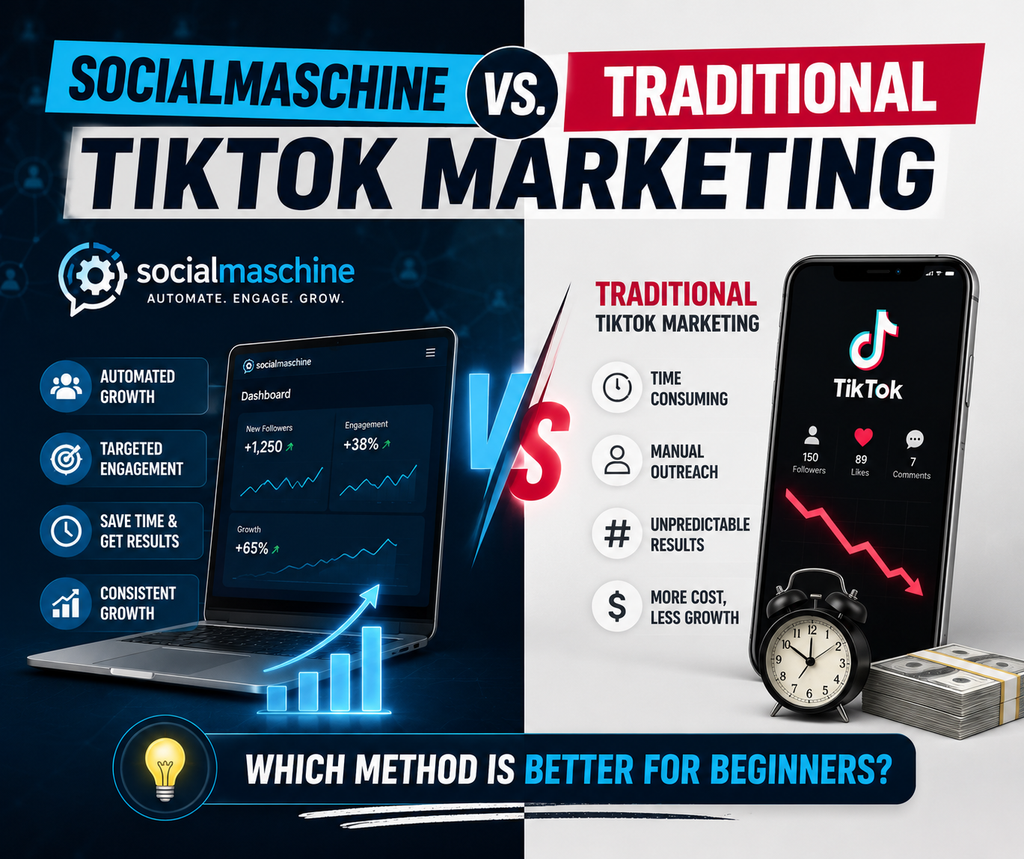
If you’ve spent any time researching how to make money on TikTok, you’ve probably come across paid courses and “systems” promising a shortcut — Socialmaschine being one of them. It’s marketed as a step-by-step program for earning money on TikTok without needing followers, without showing your face, and largely on autopilot.
But how does a packaged course like this actually compare to just learning TikTok marketing the traditional way — through free strategy, trial and error, and organic growth? Here’s an honest breakdown for beginners trying to decide where to put their time (and money).
What Is Socialmaschine, Exactly?
Socialmaschine is sold as a done-for-you digital course/system, distributed through the Digistore24 marketplace (a common platform for German-language info products). The sales page centers on a personal earnings claim — up to €257 per day — and emphasizes that the method works “without a single follower” and “completely anonymously.”
A few things worth flagging upfront, in the interest of being straightforward:
- The income figure is a marketing claim, not a verified result. Like most “make money online” sales pages, the number comes from the seller, not from an independent audit or aggregated user data. Treat it the way you’d treat any income claim in an ad: possible for some, not guaranteed, and likely not typical.
- “Anonymous and no followers needed” is a common hook in this niche, not something unique to this product. It usually refers to leaning on TikTok’s algorithm-driven discovery (which does favor content over follower count) rather than any special technique.
- I couldn’t find independent reviews or a breakdown of what’s actually inside the course beyond the sales funnel itself, so treat the “what you get” section below as based on how it’s marketed, not a verified curriculum.
With that context set, here’s how a course-based approach like this generally stacks up against learning TikTok marketing the traditional, unpackaged way.
Traditional TikTok Marketing: The Free Route
“Traditional” TikTok marketing means learning through free resources, TikTok’s own Creator tools, trial-and-error posting, and organic strategy — the same approach creators have used to build TikTok Shop affiliate income, brand deals, and ad revenue without paying for a course.
Pros:
- Zero upfront cost. Everything you need to start (TikTok Shop’s affiliate program, the Creator Rewards Program, UGC opportunities) is free to access.
- You learn the actual mechanics, not just a script. Understanding why a video performs well transfers to every future post; a rigid formula doesn’t always.
- No risk of a low-quality or oversold product. You’re not depending on a third party’s promises.
- Flexible and niche-agnostic. You can adapt your strategy to whatever product category or content style fits you.
Cons:
- Slower to get oriented. You’ll spend time sorting good advice from bad across blogs, YouTube, and TikTok itself.
- No accountability structure. Courses often provide a checklist or community that keeps beginners consistent — free learning requires more self-discipline.
- Trial and error costs time, even if it doesn’t cost money.
Socialmaschine (and Courses Like It): The Paid Route
Pros (as marketed):
- Structure and a defined process. For beginners who get overwhelmed by open-ended research, a step-by-step framework can reduce decision fatigue.
- Potential shortcuts on things like hook-writing, niche selection, or posting cadence, if the content is genuinely well-researched.
- A packaged starting point, which can be appealing if you’d rather follow a system than build one yourself.
Cons:
- Cost, with uncertain ROI. You’re paying for a bundled process before you know if it fits your niche or content style.
- The core tactics are usually not proprietary. Most legitimate TikTok income strategies — TikTok Shop affiliate marketing, Creator Rewards, UGC content — are publicly documented and free to learn. A paid course typically packages this information rather than revealing something unavailable elsewhere.
- Sales-page red flags are common in this space. Big daily income numbers, “anonymous,” urgency countdowns, and “free gift” pop-ups are hallmark patterns of aggressive info-product marketing — not necessarily a scam, but a sign to read reviews and refund policies closely before buying.
- Quality varies enormously. Without independent reviews, you’re taking the seller’s word for the content quality.
So Which One Is Actually Better for Beginners?
Here’s the honest answer: the underlying strategies are the same either way. Whether you learn it from a free guide or a paid course, TikTok income for beginners comes down to the same handful of levers — TikTok Shop affiliate commissions, Creator Rewards payouts, UGC content deals, and consistent, well-hooked posting. No course, paid or free, changes TikTok’s algorithm or invents a loophole.
Given that, a reasonable decision framework looks like this:
- If you’re the type who needs structure to stay consistent, a paid course can be worth it — but only after checking for independent reviews, a clear refund policy, and specifics about what’s actually taught (not just the income promise).
- If you’re comfortable researching and experimenting, you can build the same skill set for free using TikTok’s own Creator tools, the TikTok Shop affiliate marketplace, and consistent posting — with zero financial risk.
- Either way, be skeptical of specific daily-income promises. Real TikTok earnings vary wildly by niche, content quality, and consistency — no course can promise a number.
A Practical Middle Ground
You don’t have to choose one path exclusively. A sensible approach for most beginners:
- Start with free resources and TikTok’s native programs (Shop affiliate, Creator Rewards) to learn the mechanics with no financial risk.
- Post consistently for a few weeks and see what actually resonates with your content style.
- If you hit a wall — say, on scripting hooks or picking a niche — then evaluate a paid course on its specific teaching content, not its income claims.
- Before buying anything, check the platform’s refund policy (Digistore24 products typically carry a standard withdrawal/refund window under German consumer law) and look for reviews outside the seller’s own site.
The fastest path for most beginners is still the free one — not because paid courses can’t help, but because the actual techniques that make TikTok income possible are already public, and no course can substitute for consistent posting and testing.
Disclosure: This article discusses a paid third-party product based on publicly available marketing material. Earnings claims referenced are the seller’s own and have not been independently verified. Always research a product’s refund policy and independent reviews before purchasing.
Leave a Reply