How to Build a Simple Online Income System Step by Step
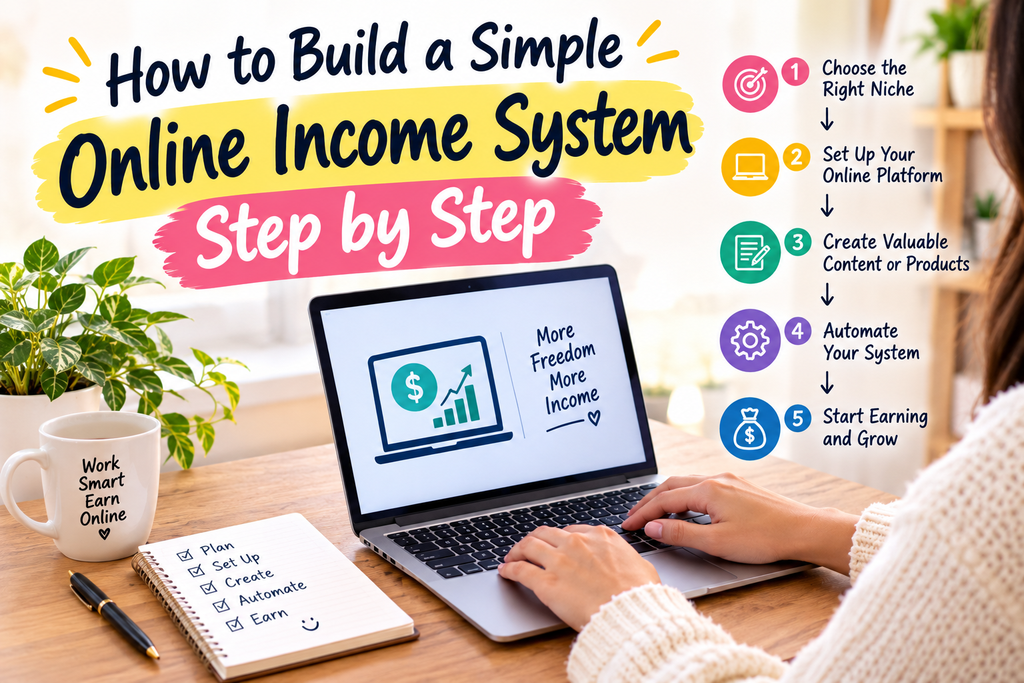
Building an online income system doesn’t require special talent or a big budget — it requires a clear process and the discipline to follow it. Here’s a step-by-step approach that works whether you’re starting from zero.
Step 1: Choose a Model That Fits Your Skills and Time
Before anything else, pick one income model. Trying to do five things at once is the most common reason people quit. Popular beginner-friendly options include:
- Freelancing – selling a skill you already have (writing, design, coding, video editing) on platforms like Upwork or Fiverr.
- Content-based income – blogging, YouTube, or a newsletter monetized through ads, affiliate links, or sponsorships.
- Digital products – templates, courses, ebooks, or presets sold once and delivered automatically.
- E-commerce/dropshipping – selling physical products without holding inventory.
- Service-based agency – packaging a skill (like social media management) into a recurring service for small businesses.
Pick the one that matches your current skills and the time you can realistically commit — not the one that looks most exciting online.
Step 2: Validate Demand Before Building
Don’t build first and ask later. Spend a week checking whether people actually want what you’re planning to offer:
- Search your idea on forums, Reddit, or Facebook groups — are people asking for it?
- Check if competitors exist and are active (competition usually means demand, not failure).
- Ask 5–10 people directly if they’d pay for what you’re planning.
If nobody wants it, adjust before you invest real time.
Step 3: Set Up Your Foundation
This is the boring-but-essential infrastructure step:
- A simple website or landing page (even a single page)
- A way to collect emails (an email list is the backbone of most online income)
- Payment processing (Stripe, PayPal, or the platform’s built-in checkout)
- Basic branding — name, logo, consistent look
Keep this minimal at first. A polished website isn’t what generates income; an offer that solves a problem does.
Step 4: Create Your First Offer
Your first offer should be small and specific, not a huge catalog. Examples:
- One freelance service package instead of ten
- One digital product instead of a full course library
- One niche instead of “everything”
A focused offer is easier to market and easier to improve based on real feedback.
Step 5: Drive Traffic Consistently
Pick one or two traffic channels and go deep instead of spreading thin across every platform:
- Organic content – short-form video, blog SEO, or a niche community presence
- Direct outreach – cold emails or DMs (especially effective for freelancing/agency models)
- Paid ads – once you have proof the offer converts
Consistency beats intensity — regular small efforts compound faster than occasional bursts.
Step 6: Convert Visitors Into Customers
Once traffic starts flowing, focus on conversion:
- A clear headline that states the benefit, not just the feature
- Social proof (testimonials, results, reviews)
- A simple, low-friction checkout or contact process
- Follow-up emails for people who didn’t buy immediately
Step 7: Deliver Well and Collect Feedback
Your first customers are your most valuable source of improvement. Over-deliver where you can, then ask directly what worked and what didn’t. This feedback loop is what turns a shaky first offer into something people recommend to others.
Step 8: Automate and Systemize
Once you have consistent sales or clients, start removing yourself from repetitive tasks:
- Email sequences instead of manual follow-ups
- Templates for common client work
- Scheduling tools for content and outreach
- Simple SOPs (standard operating procedures) so tasks can eventually be delegated
Step 9: Reinvest and Scale
With a working system, reinvest profits into what’s already proven to work — more ad spend, more content, or hiring help for tasks that eat your time. Avoid the trap of starting a second income stream before the first one is stable.
The core principle: pick one model, validate it, build a minimal foundation, get one offer in front of real people, and improve based on actual results — not guesses. Most “systems” fail not because the idea was bad, but because people switch models before giving one enough time to work.
Want this turned into a downloadable document or a checklist you can print/save?
Leave a Reply